Skip to content
MunichKeyConcierge

The MunichKey Journal

Volume I · Munich

Notes on Munich, tradition & the Wiesn

Oktoberfest, properly understood.

TraditionTrachtEtiquetteMunich

MunichKey · Munich

Journal No. 01

Foreword

Oktoberfest is easy to recognise and surprisingly difficult to explain.

To Munich, it is neither spectacle nor costume. It is tradition, ritual and a few weeks each year in which the city behaves slightly differently.

None of it requires a rulebook. But knowing a little about what you are looking at changes the experience.

Munich · The MunichKey Journal

Chapter 01

Oktoberfest, before it became Oktoberfest.

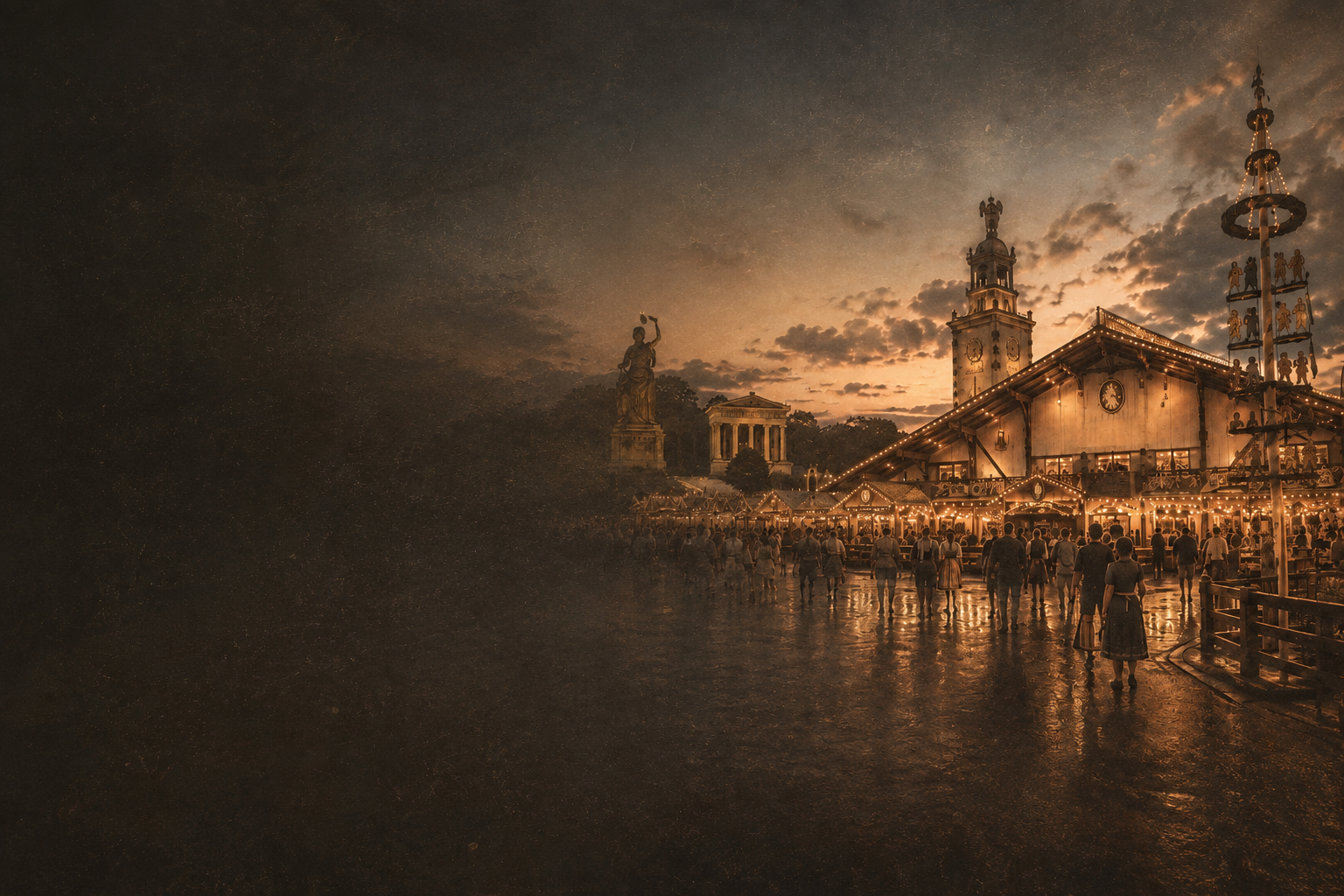
The first Oktoberfest took place in 1810 to celebrate the marriage of Crown Prince Ludwig of Bavaria and Princess Therese of Saxe-Hildburghausen. The celebrations were held on fields outside the city gates — the site that would become the Theresienwiese.

Munich still calls Oktoberfest simply die Wiesn. The name is casual, almost domestic, and says something about the relationship the city has with the festival. For visitors it may be a spectacle. For Munich, it is something that returns.

Its scale has changed enormously, but the Bavarian identity remains central: music, breweries, food, traditional dress and rituals repeated from one generation to the next.

MK · 01
Chapter 02

Details carry meaning.

The Dirndl

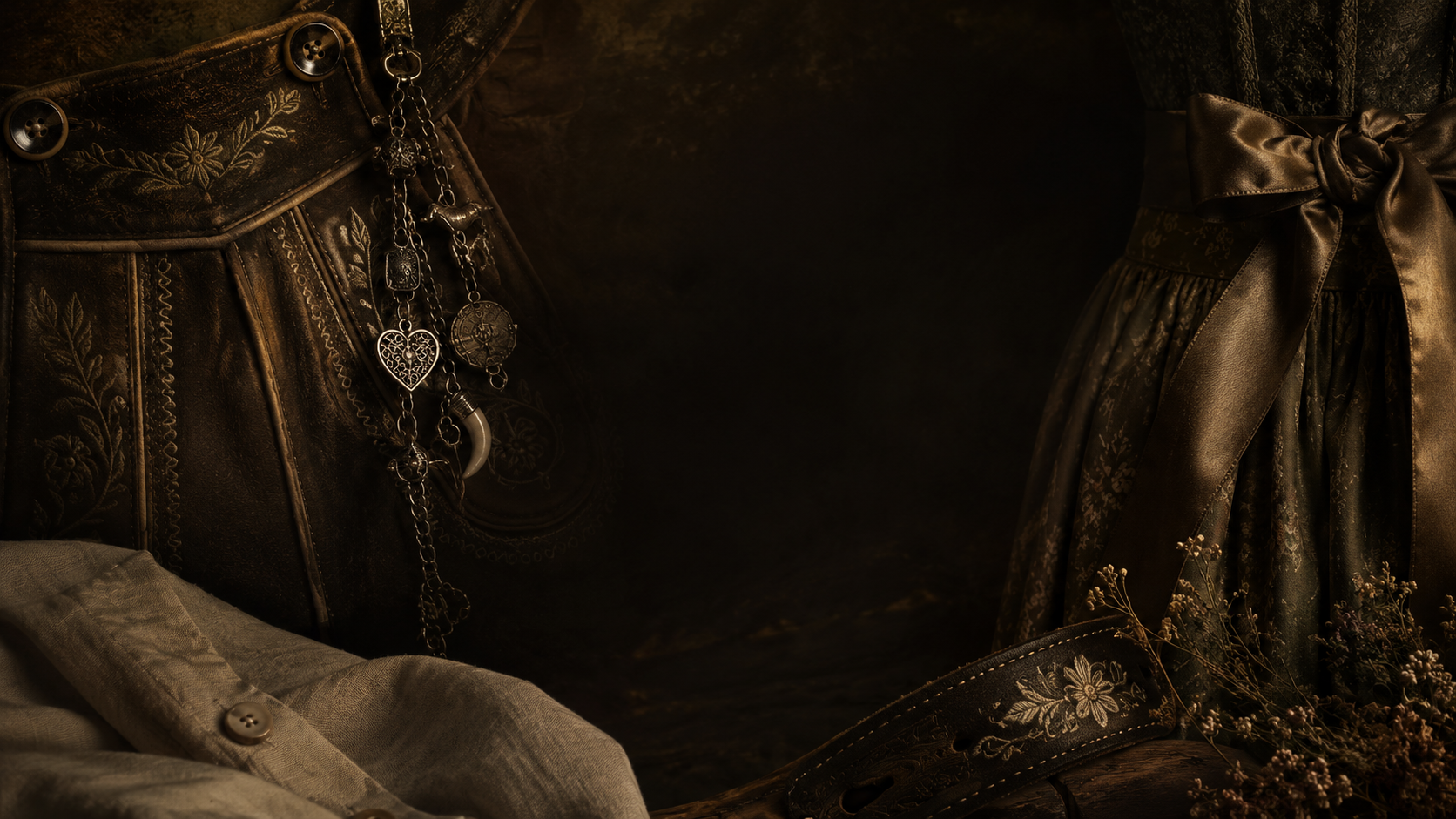
The Dirndl was never intended simply as a costume. Its proportions, fabrics and details belong to a regional tradition that has evolved considerably over time.

A traditional Dirndl consists of the dress, blouse and apron. Length, fabric, cut and finishing all matter. In Munich, the difference between dressing for Oktoberfest and dressing up for Oktoberfest can be subtle — but noticeable.

The Lederhosen

Lederhosen are the traditional counterpart to the Dirndl. Originally worn as durable working and hunting clothing in the Alpine regions of Bavaria and Austria, they have long since become an established part of Bavarian Tracht.

Good Lederhosen are made from substantial leather and often finished with restrained embroidery, traditional buttons and details that gain character with age. As with the Dirndl, material, proportion and the way they are worn make the difference between Tracht and costume.

The Apron Bow

The position of the apron bow is traditionally associated with relationship status. To the wearer’s left is commonly understood to mean single; to the right, partnered or married. Today it is best understood as tradition rather than an inflexible social code.

The Charivari

Traditionally worn across the front of Lederhosen, the Charivari developed as a collection of trophies, talismans and objects carrying personal meaning.

Its character comes less from ornament for ornament’s sake than from provenance, memory and the way it is worn.

MK · 02

Chapter 03

The things rarely written down.

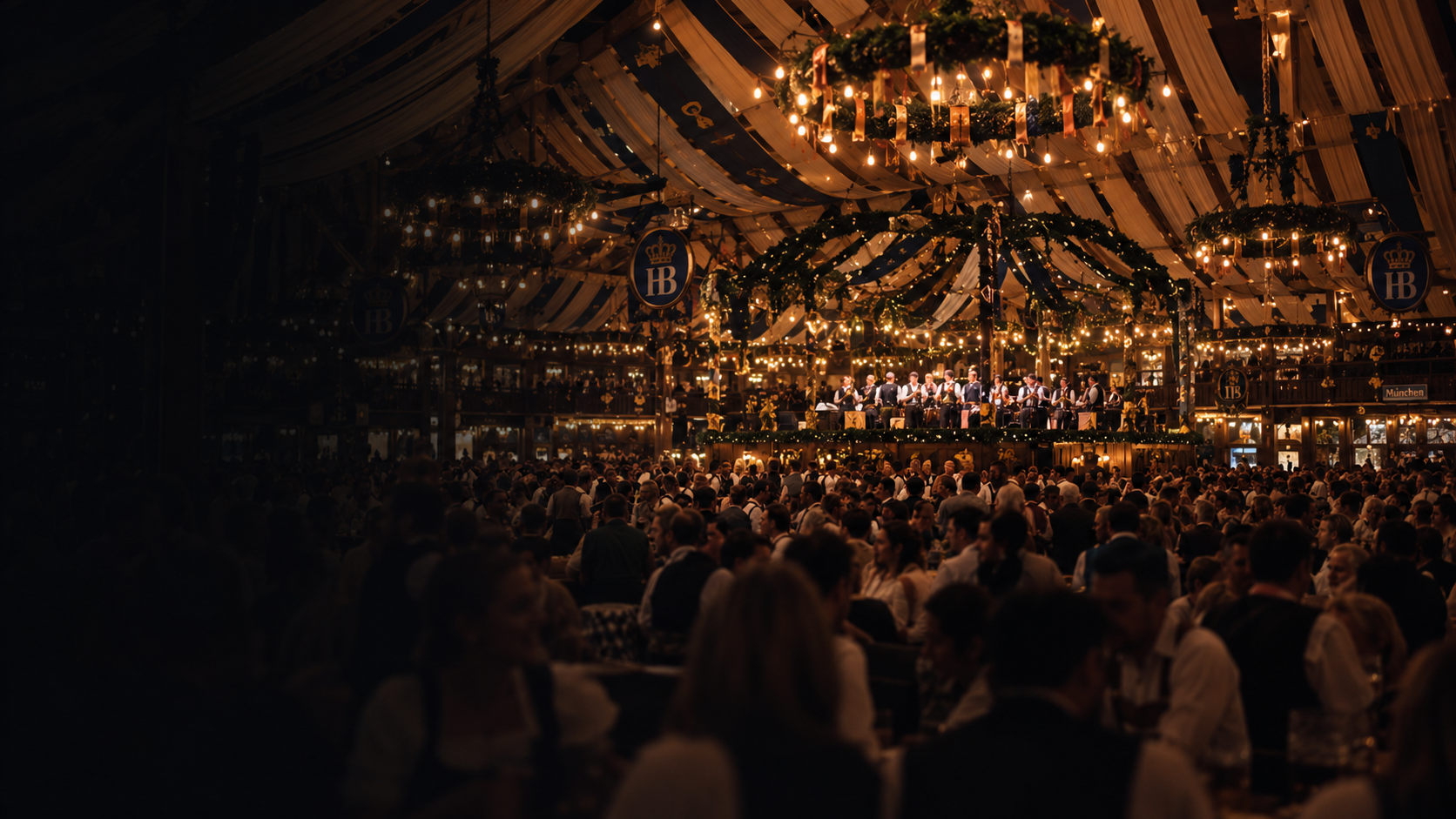
Oktoberfest is informal, but it is not without etiquette. Tables are shared, service is fast and a busy tent operates with its own rhythm.

Courtesy to service staff matters. So does respecting the space of other guests. A toast is made properly, eye contact included. Traditional clothing is worn as clothing rather than novelty dress.

None of these details should make the experience feel complicated. Quite the opposite: understanding the setting makes it easier to relax into it.

MK · 03

Chapter 04

The festival is only one version of the city.

Munich has always balanced polish with understatement. The grandeur of the Residenz sits only a short distance from beer gardens, old institutions and neighbourhood places that have changed remarkably little.

The Isar, the English Garden, museums, opera, old cafés, contemporary restaurants and the architecture of the Altstadt give the city a character that is difficult to reduce to a single season.

Oktoberfest may be the reason for the journey. Munich is often the reason to stay longer.

MK · 04

MunichKey Concierge

Some things are better understood locally.

MunichKey coordinates private Munich and Oktoberfest stays for guests who prefer not to leave the details to chance.

Private Munich & Oktoberfest enquiries

The MunichKey Journal

Volume I